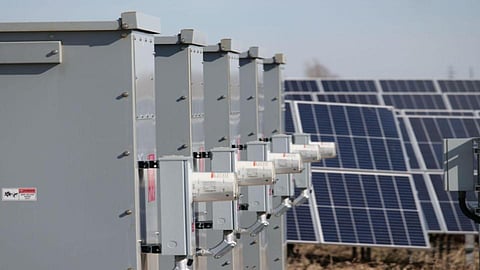

The US Department of Energy has authorized NOMAD Power Solutions to advance the Vermont long-duration energy storage project into Phase 3. The approximately $19 million project is expected to deploy up to eight transportable BESS units across five sites in Green Mountain Power’s service territory. The project will demonstrate applications including peak management, planned maintenance, emergency response, renewable energy integration and grid resilience
Click here for a quick project snapshot
NOMAD Transportable Power Solutions, a wholly-owned subsidiary of NOMAD Power Solutions, moves into Phase 3 of the Vermont long-duration energy storage project. The company announces that the US Department of Energy (DOE) has authorized it to advance into Phase 3, which covers installation, integration and construction of its patented transportable BESS.
The project value is estimated at approximately $19 million. It is expected to deploy up to eight NOMAD transportable battery energy storage system (BESS) units across five sites within Green Mountain Power’s service territory.
The project builds on GMP’s existing use of a NOMAD system for peak management and maintaining customer service during planned utility maintenance. NOMAD’s flexibility in addressing diverse utility needs through transportable energy storage solutions is a key aspect of the project.
Moving to Phase 3, the Vermont Project will move into installation, integration, and construction, with GMP already using a NOMAD system for peak management and customer service during planned maintenance. The patented, transportable platform can support various grid needs, including emergency response, renewable energy integration, and resilience.
The project value is estimated at approximately $19 million, including a $9.5 million DOE award, with the remaining costs covered by a roughly 50% non-federal cost share. Future reimbursements are subject to the terms and milestones of the cooperative agreement.
Green Mountain Power’s operational use of NOMAD technology demonstrates how a transportable energy storage system can support multiple utility needs. According to NOMAD, mobility enables utilities to deploy storage where and when it is needed.
Conventional stationary battery installations are generally designed for a specific location and application. In contrast, NOMAD's patented transportable platform is engineered to be redeployed as operational requirements change.
A single system can potentially support multiple applications across different locations. Phase 3 will incorporate NOMAD’s latest platform. It features next-generation lithium iron phosphate batteries and microgrid-enabled controls to demonstrate flexible grid support.
GMP’s existing use of NOMAD for peak management and planned maintenance highlights its potential for grid reliability, resilience, and operational flexibility.
This flexibility of transportable utility-scale storage provides a commercial reference as the company engages additional utility and industrial customers. With authorization to proceed into Phase 3, NOMAD will continue work under DOE award DE-OE0000952 in accordance with the project’s Statement of Project Objectives. It supports the demonstration of transportable battery energy storage as a flexible and potentially capital-efficient resource for utilities and critical power users.
