
News Synopsis
PROJECT SNAPSHOT:
Project Name – Orana BESS.
Developer / Owner – Akaysha Energy.
Project Type – Battery energy storage system.
Capacity – 415 MW / 1,660 MWh.
Location – Near Wellington, New South Wales, Australia.
Technology Used – 4-hour battery energy storage system.
Project Status – Commercial operations reached.
Timeline – COD announced on 30 June 2026.
Power Offtaker / Buyer – EnergyAustralia under a 200 MW virtual tolling agreement.
Purpose / Use Case – Firming capacity, grid reliability, energy arbitrage.
Expected Output / Benefit – Supports Akaysha’s operational BESS portfolio above 4 GWh.
Agreement / Contract Details – 200 MW VTA, LTESA under NSW Roadmap Tender Round 2.
Companies Involved – Akaysha Energy, EnergyAustralia, CPP Australia, Transgrid, Tesla, Tyree Transformers, Wilson Transformer Company.
Headquarters – Melbourne, Australia.
Source Date – 30 June 2026.
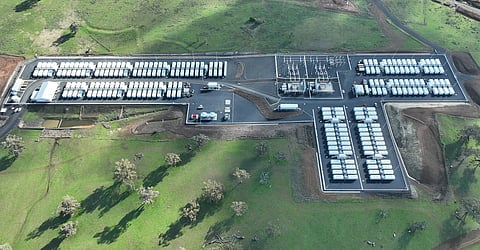
Australia-based large-scale battery energy storage systems company, Akaysha Energy, has announced the commercial operation of its Orana Battery Energy Storage System (BESS) in New South Wales. The project marks the company's fourth utility-scale battery to enter commercial operations and increases its total operational battery storage capacity to more than 4 GWh. The milestone further expands Akaysha's presence in Australia's battery energy storage market.
The Orana BESS is located about two kilometers northeast of Wellington in the Central West Orana Renewable Energy Zone (REZ), New South Wales. The battery has a capacity of 415 MW and can store up to 1,660 MWh of energy over four hours. The REZ is expected to support roughly 3,000 MW of new wind and solar power in the coming years.
The battery project is designed to provide firming capacity and support electricity grid reliability as renewable generation increases across New South Wales. By storing electricity during periods of excess generation and supplying it when demand rises, the system can improve grid flexibility. The project also enables more efficient use of renewable electricity connected within the Central West Orana Renewable Energy Zone.
Akaysha Energy has a 200 MW virtual tolling agreement (VTA) with EnergyAustralia covering part of the Orana BESS capacity. Under this agreement, EnergyAustralia can access the commercial value of battery storage, including energy arbitrage and quick market dispatch, without owning or operating the physical asset. Akaysha continues to manage the battery while supporting the agreed market services.
According to Akaysha Energy, the VTA structure offers an alternative commercial model for deploying large-scale battery storage. EnergyAustralia stated that the agreement provides access to firming capability and renewable energy storage while supporting battery financing. The arrangement enables market participants to benefit from battery services without directly investing in operating storage infrastructure.
The project also received support under the Commonwealth of Australia's Capacity Investment Scheme. Additionally, the Orana BESS secured a Long-Term Energy Service Agreement (LTESA) through the New South Wales Roadmap Tender Round 2 in November 2023. The agreement provides eligible projects with access to minimum cash flow arrangements over an extended contract period, reducing revenue uncertainty for investors.
Several organisations contributed to the delivery of the Orana BESS. Consolidated Power Projects Australia, Transgrid, Tesla, Tyree Transformers and Wilson Transformer Company supported various aspects of construction and grid integration. Australian-manufactured transformers supplied by Tyree Transformers and Wilson Transformer Company were used during project delivery, helping complete the battery on schedule and within budget.
The commissioning of the Orana BESS increases Akaysha Energy's operational battery storage capacity to over 4 GWh across Australia. As more renewable generation connects to the Central West Orana Renewable Energy Zone, the battery is expected to offer operational flexibility for the electricity system. The project also highlights the ongoing use of virtual tolling agreements and long-term service contracts in Australia's growing battery storage market.