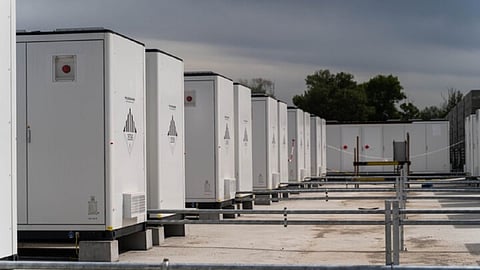

ENGIE is strengthening Belgium’s grid flexibility through large-scale battery energy storage integrated with conventional and pumped-storage assets. The 200 MW/800 MWh Vilvoorde BESS was commissioned ahead of schedule and supports renewable integration and system balancing. Alongside additional battery sites and pumped-storage upgrades, ENGIE is building a diversified flexibility portfolio to meet rising market requirements.
DATA SNAPSHOT
France-based global utility group, ENGIE has advanced Belgium’s grid flexibility strategy through the deployment of large-scale battery energy storage along with conventional generation and pumped-storage assets. A central development is the Vilvoorde Battery Energy Storage System with an installed capacity of 200 MW / 800 Mwh has commissioned two months ahead of schedule.
The Vilvoorde BESS has been positioned as a core asset for managing rising renewable generation, enabling rapid response to demand variability without continuous reliance on thermal generation. According to the company, an expansion to 300 MW / 1,200 MWh remains under evaluation, reflecting expectations of risingin flexibility requirements within Belgium’s electricity market. Combined with battery projects at Kallo and the awarded Drogenbos site, ENGIE has targeted a cumulative installed battery storage capacity of 380 MW / 1.5 GWh in Belgium by 2027.
In parallel with lithium-ion storage deployment, ENGIE has continued to integrate battery systems with other flexibility technologies The Coo pumped-storage plant modernization has progressed in parallel, adding 79 MW / 450 MWh and increasing total installed capacity to 1.16 GW / 6.45 GWh.
The Belgian portfolio forms part of ENGIE’s broader European energy storage rollout. As of June 2025, the company has reported 531 MW of battery storage capacity in operation or under construction across Europe, with additional projects announced in Romania and Italy. Within this framework, battery energy storage systems have been deployed to complement dispatchable generation and variable renewable output, supporting grid operation under increasing system variability.
Paulo Almirante, ENGIE Senior Executive Vice President for Renewable and Flexible Power has described flexibility as central to integrating renewable generation with storage and dispatchable assets to maintain grid stability and system reliability.