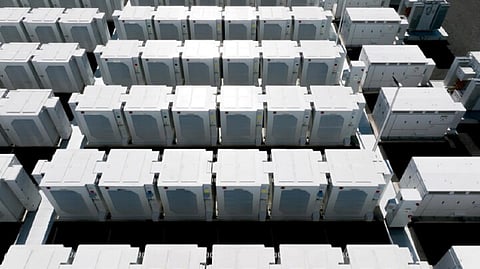

ENGIE has expanded its India portfolio with a 280 MW/560 MWh BESS project awarded by GUVNL, marking its first storage installation in the country and second largest globally. The system will provide two-hour storage capability to enhance grid stability as solar, and wind enter the energy mix and scheduled for commissioning in 2027. The project aligns with ENGIE’s target of developing 7 GW of renewable and storage capacity in India and contributes to its global goal of reaching 95 GW by 2030.
PROJECT SNAPSHOT
France-based global utility group, ENGIE, expanded its storage portfolio in India after securing a 280 MW/560 MWh BESS project awarded by Gujarat Urja Vikas Nigam Limited (GUVNL). The project was allocated under GUVNL’s national tender for 2 GW/4 GWh of energy storage capacity.
Storage Scope
ENGIE stated that this is its first battery energy storage project in India and its second-largest BESS project globally. The system was scheduled for commissioning in 2027 with a two-hour electricity storage duration.
As of June 30, 2025, ENGIE had almost 2 GW of wind and solar capacity operating or under construction in India. These projects were stated as part of the company’s long-term expansion strategy in the country, which targeted 7 GW of renewable and storage installations by 2030. ENGIE said the Gujarat project supports India’s grid stability needs as solar and wind deployment increases and aligns with the national target of reaching 500 GW of renewable energy by 2030.
Expansion Targets & Executive Statement
Globally, ENGIE reported operating or under-construction BESS capacity of 5.6 GW as of June 2025. This capacity contributed to the company’s plan to reach 95 GW of combined renewable and storage installations by 2030.
Paulo Almirante, Senior Executive Vice President for Renewable and Flexible Power, said that the BESS project added to the Group’s storage activities in India. He referenced the use of storage across varying power system conditions and its placement within national plans to integrate storage with growing renewable capacity.
