

EXECUTIVE SUMMARY
Plans for Maine’s first competitive energy storage solicitation have been submitted to the state PUC for review. The proposed procurement targets up to 360 MW of storage, which would more than double Maine’s current capacity while supporting grid reliability, renewable energy integration and ratepayer benefits.
Click here for a quick project snapshot
The Maine Department of Energy Resources (DOER) is the state department responsible for energy policy, planning and programs in Maine. Established as a cabinet-level department under Governor Janet Mills, DOER oversees initiatives related to energy affordability, reliability, clean energy resources and the state’s statutory energy objectives.
On July 20, 2026, DOER announced that it had submitted plans for Maine’s first competitive energy storage solicitation to the Maine Public Utilities Commission (PUC) for review. The proposed solicitation seeks to procure up to 360 MW of energy storage, which would more than double the state’s current storage capacity.
The solicitation is the first developed under the authority granted to DOER following the establishment of the department. Under state law, the Maine PUC must review and approve the proposed request for proposals (RFP) before energy storage developers can submit project proposals.
Earlier in 2026, DOER released a draft RFP for energy storage systems pursuant to 35-A M.R.S. §10313. The draft stated that the Department anticipated seeking “between 200 megawatts (MW) and 300 MW or more of new energy storage resources.” The plan subsequently submitted to the PUC provides for procurement of up to 360 MW.
Proposals will therefore need to demonstrate net benefits for Maine ratepayers before being considered for an award.
The procurement also has several statutory objectives. These include providing renewable and clean energy benefits to ratepayers, supporting Maine’s greenhouse gas reduction obligations and climate policies, contributing to economic and workforce goals, limiting environmental impacts and protecting low-income ratepayers. The solicitation also seeks to “avoid or minimize the curtailment of other renewable or clean resources.”
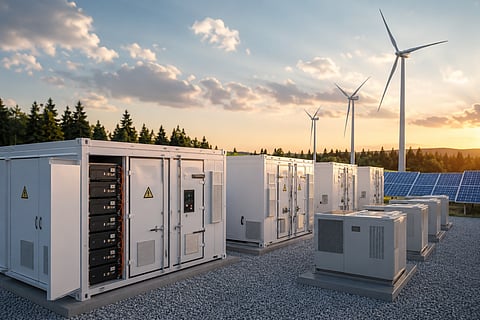
Energy storage systems can store electricity during periods of excess generation and discharge it when demand increases. This can help integrate renewable generation from sources such as solar and wind and provide additional flexibility to the electricity grid.
DOER has also published a handbook for Maine communities covering BESS and other clean energy resources. It includes information on storage technologies, state and federal regulations, local policy considerations, frequently asked questions and a model BESS ordinance.
Following PUC review and approval, the proposed RFP can proceed to the competitive solicitation stage, allowing eligible energy storage projects to submit proposals.