

EXECUTIVE SUMMARY
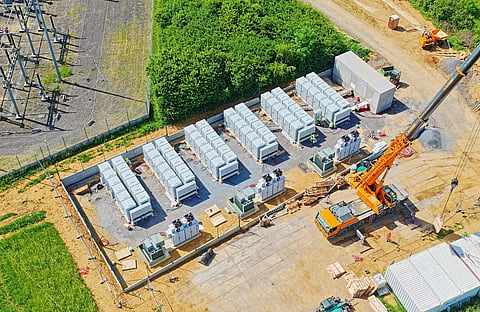
Walloon institutions and Triodos Bank are supporting Renner Energies’ first BESS project in Virton, Belgium. The 12 MW, two-hour facility is scheduled for commissioning in September 2026 and will become the first battery park connected to Wallonia’s distribution grid, supporting electricity storage, grid stability and renewable energy integration.
Click here for a quick project snapshot
Renner Energies, a renewable energy developer active in Europe, has secured financial and institutional backing for its first BESS project in Virton, Wallonia, Belgium. The facility will have a total power output of 12 MW and a two-hour storage duration, equivalent to approximately 24 MWh of energy storage capacity.
Triodos Bank has provided bank financing for the project. Its development has also received support from Wallonie Entreprendre, SOCOFE and the Walloon Region’s Kyoto Fund. The involvement of these institutions supports the deployment of energy storage infrastructure within Wallonia.
Commissioning of the Virton BESS is scheduled for September 2026. According to Renner Energies, the facility will be the first battery park connected to the distribution grid in Wallonia.
The system will store excess electricity and release it during periods of higher demand. By operating closer to points of electricity consumption, the facility is also expected to contribute to distribution-grid stability and provide flexibility as more renewable generation is integrated into the electricity system.
The Virton facility is Renner Energies’ first BESS project and forms part of its plans to develop additional storage capacity across Belgium’s transmission and distribution networks.
The company has recently obtained two additional permits for battery storage projects in Villeroux and Chiny. Together, the two projects are planned to provide a combined capacity of 125 MW.
The three developments indicate an expanding storage pipeline for Renner Energies in Wallonia. Once deployed, the facilities are expected to provide additional flexibility for Belgium’s electricity network by shifting electricity between periods of excess generation and higher demand. The projects are also intended to support greater integration of variable renewable energy while contributing to grid resilience.