
EXECUTIVE SUMMARY
Hungary has launched a HUF 100 billion residential battery subsidy supporting up to 10 kW systems with grants covering over 80% of costs. The scheme accelerates solar-plus-storage adoption, reduces peak grid demand, and strengthens Europe’s battery supply chain. Combined with substantial C&I funding, Hungary’s total installed battery storage capacity is projected to exceed 500 MW by 2026 nationwide market development.
The Hungarian government has launched a residential battery energy storage subsidy program valued at HUF 100 billion ($2.27 billion). Under the scheme household can install 10 kW battery energy storage systems, with a non-refundable subsidy of HUF 2.5 million (€6,300 / $6,870) per installation to support purchase.
The subsidy can cover more than 80% of total installation costs, depending on system size and configuration, reducing upfront capital requirements for households. Eligibility applies to both existing rooftop solar PV installations and new solar-plus-storage systems, supporting the deployment of behind-the-meter battery energy storage within Hungary’s residential electricity market.
The policy enables households to store surplus solar generation, reducing grid imports during peak demand. Residential battery systems are expected to operate with smart inverters and energy management systems to enable controlled charging and discharging aligned with grid conditions.
In addition to the residential deployment, Hungary has implemented funding programs supporting commercial and industrial BESS. Approximately €4.9 billion has been allocated for C&I battery projects, with an additional €1.07 billion available under the Jedlik Ányos Program. These funding mechanisms have enabled the deployment of standalone and hybrid battery energy storage systems across a range of capacity segments. Based on publicly disclosed projects and confirmed funding allocations, Hungary’s total installed battery energy storage capacity, including residential, C&I, and grid-scale systems, is expected to exceed 500 MW by 2026.
The residential subsidy is likely to affect demand for battery equipment within the European supply chain, including lithium iron phosphate battery systems commonly used in residential installations due to cycle performance and thermal properties. Residential battery configurations typically range from 5 kWh to 15 kWh and are commonly installed as wall-mounted systems integrated with rooftop solar PV. In the commercial, industrial, and utility segments, modular battery energy storage systems ranging from tens of kWh to multi-MWh capacities are being deployed for applications such as peak shaving, load shifting, and grid services.
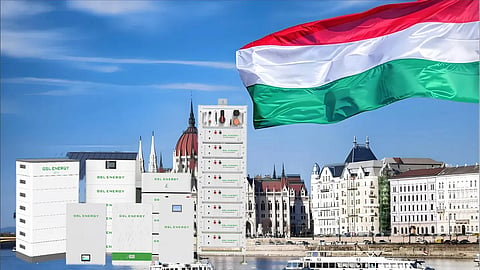
Within this market environment, battery system suppliers with products certified for European standards are participating across residential, C&I, and utility-scale segments. GSL ENERGY, headquartered in Shenzhen, China, supplies lithium battery energy storage systems for residential, commercial, industrial, and utility applications, including LiFePO₄-based battery systems designed for integration with hybrid inverter platforms used in European solar installations.